

Football in Nepal has never been merely a sport.
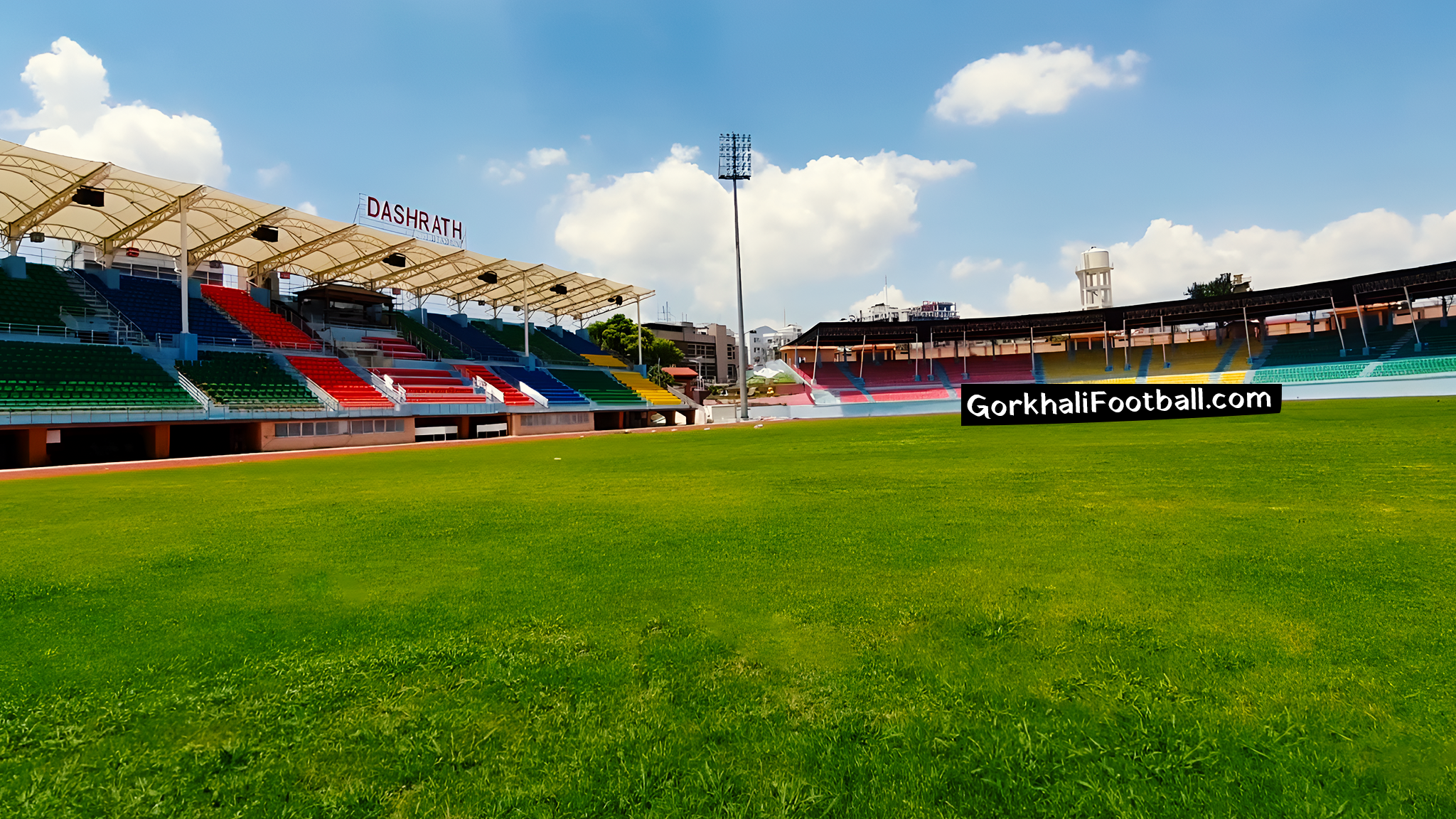
From school grounds and dusty neighbourhood pitches to the packed stands of Dasharath Stadium, football has carried something deeper—a sense of belonging, national pride, and possibility. For generations of Nepalis, the national shirt has represented a dream far greater than the ninety minutes played on a football field.
Today, that dream is in danger of being interrupted.
On June 24, 2026, FIFA suspended the All Nepal Football Association (ANFA) indefinitely, citing third-party interference in the affairs of the football governing body. The suspension stripped ANFA of its FIFA membership rights and prevented Nepal’s national teams and clubs from participating in FIFA and AFC sanctioned international competitions. ANFA and its officials also lost access to FIFA and AFC development programmes, training opportunities, and related support.
More than 100 days later, the consequences are no longer confined to football offices in Kathmandu. They are being felt on the training ground, inside academies, in players’ bank accounts, and in the future plans of young footballers.
The Dispute Behind the Suspension
At the heart of the crisis is a dispute over who controls the administration of Nepali football.
FIFA requires its member associations to operate independently from outside interference. In Nepal, however, the National Sports Council (NSC) and ANFA became locked in a dispute over ANFA’s statutes and electoral process. The NSC suspended ANFA in March after accusing the association of failing to comply with government directives and legal provisions concerning its electoral process. Although that suspension was later withdrawn, the dispute did not disappear, leading FIFA to determine that the situation constituted prohibited third-party interference.
FIFA’s conditions for lifting the suspension include the full revocation of the NSC’s March decisions, the reinstatement of the existing ANFA executive committee, and allowing ANFA to complete its electoral process in accordance with its statutes and regulations.
However, competing narratives have complicated the political landscape. ANFA has publicly asserted that external overreach and government interference have unnecessarily prolonged the crisis, while government representatives—such as NSC officials—maintain that high-level efforts are actively underway to resolve misunderstandings and lift the suspension. What began as an institutional disagreement has thus ballooned into a crisis with consequences extending far beyond the boardroom.
The First Major Loss: Nepal Without the SAFF Championship
The consequences have already reached one of the biggest stages in South Asian football. Nepal missed the opportunity to participate in the 2026 SAFF Championship in Bangladesh after the September 30 deadline passed without the FIFA suspension being lifted.
It is a historic absence: Nepal had participated in every previous edition of the SAFF Championship. For supporters, missing a tournament is heartbreaking. For players, it means fewer competitive matches, less international exposure, and another missed chance to wear the colors of their country. ANFA officials note that this is part of a wider pattern, with multiple international opportunities already slipping away since the suspension began.
The CIB Probe: A Broader Administrative Crisis
Adding a volatile new dimension to the deadlock, the crisis has expanded beyond governance into the realm of criminal inquiry. The Central Investigation Bureau (CIB) of the Nepal Police has opened an investigation into alleged financial irregularities, fraud, and match-related matters involving certain ANFA officials, which has included high-profile questioning and document seizures.
It must be emphasized that these claims are under active investigation and represent allegations rather than proven wrongdoing. Yet, the emergence of a police probe alongside the administrative suspension places ANFA under unprecedented scrutiny, deepening the institutional paralysis.
A Fragile Domestic Foundation and the Lost Generation
Perhaps the most uncomfortable truth about Nepali football is that the crisis did not begin with FIFA’s suspension. The country’s domestic ecosystem was already faltering. The top-flight A-Division League has sat idle for more than 1,100 days, with the last season concluding back on June 10, 2023.
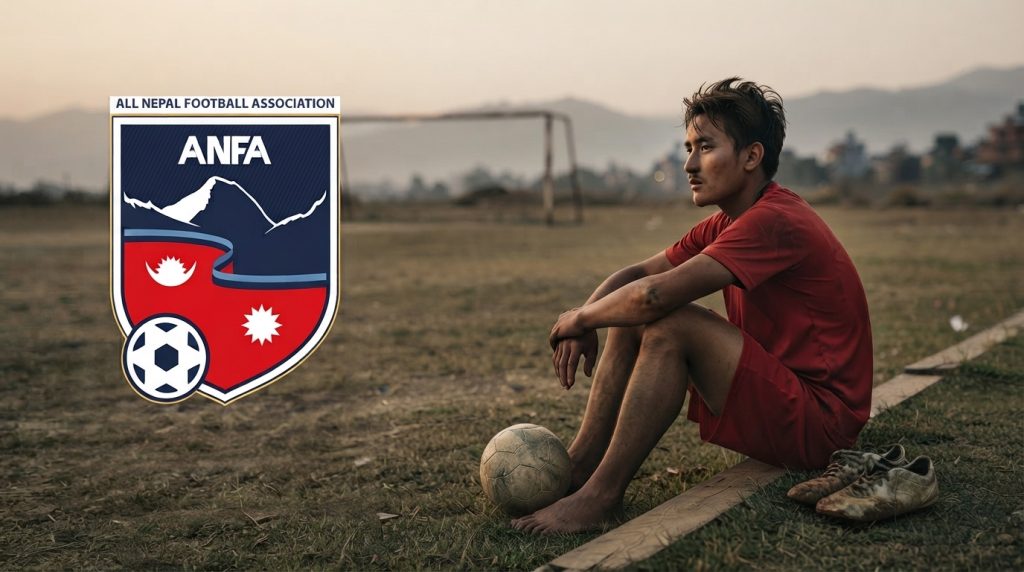
Without a functioning league, the financial and professional structure collapses:
- Players lose match sharpness, contracts, and steady incomes, forcing many to seek survival jobs outside football or migrate abroad.
- Coaches, referees, and club staff find their livelihoods choked off.
- Academy children face deteriorating conditions regarding education, food, and housing as operational funding dries up.
Stakeholders warn that Nepal is staring down a lost generation of talent. A teenager losing crucial developmental years cannot simply recover that time when the system eventually restarts. With roughly a quarter of players from the last A-Division campaign having already migrated abroad and half stopping altogether, Nepal faces a stark paradox: more children dreaming of becoming footballers than professional local structures left to support them.
Who is Actually Winning?
The government says it is working toward a resolution. ANFA calls for absolute institutional autonomy. FIFA demands strict adherence to its statutes.
Meanwhile, the players, coaches, clubs, and supporters wait. Every month of inaction pushes more talent away from the game. While administrators and state officials will eventually find their way back to the negotiating table, a player who loses three vital years of his prime can never get them back.
The Road Back
Lifting the FIFA suspension will reopen the door to international competition, but it will not magically rebuild what has been lost. Nepal requires a complete structural overhaul beneath the national team:
- A sustainable, regular domestic league calendar.
- Robust youth and women’s competitions.
- Transparent financial management and professional club standards.
- Stronger legal protections and contracts for players.
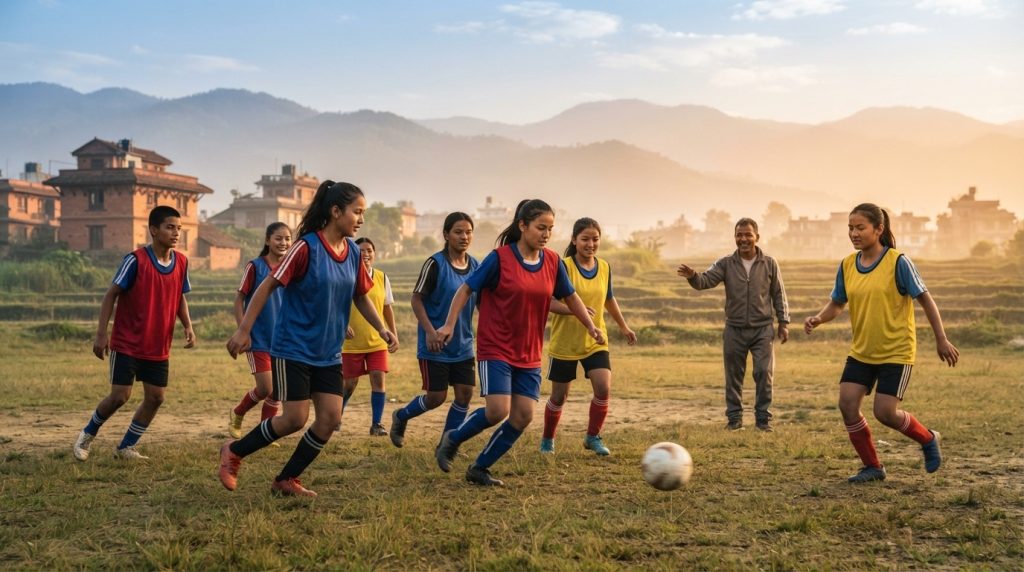
Nepal has never lacked football passion. Walk through any neighbourhood in Kathmandu, Pokhara, or Dharan, and children are still kicking a ball, imagining themselves in the national jersey. The dream is not dead, but it is running out of time.
The players are still here. The supporters are still here. The question is whether those responsible for running the game can finally build a system worthy of them.